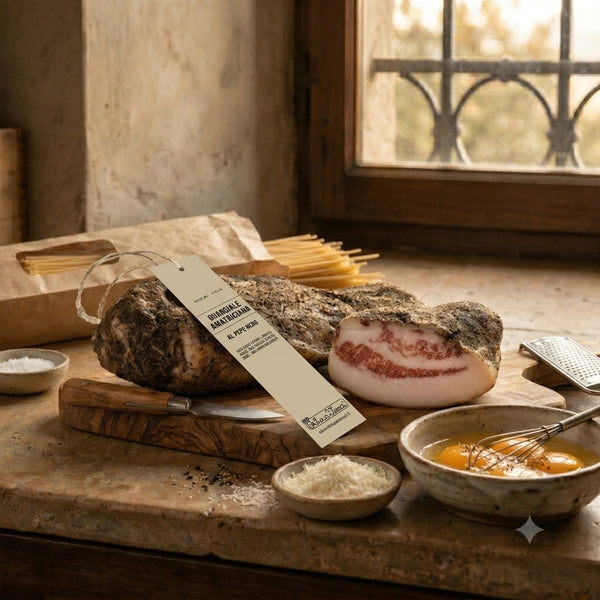

Gricia is the oldest of the four great Roman pastas, the ancestor from which amatriciana and carbonara both descend. Add tomato to a gricia and you have amatriciana; add egg and you have carbonara. The dish is said to take its name from Grisciano, a hamlet in the hills near Amatrice, and it predates the tomato's arrival in Roman kitchens entirely. In its pure form it asks for just four things: guanciale, Pecorino Romano, black pepper, and pasta, bound with nothing more than starchy cooking water and rendered fat.
That brevity is exactly what makes gricia unforgiving and exactly what makes it worth mastering. There is no sauce to hide behind. When it is right, the cheese and the pasta water emulsify with the guanciale fat into a glossy cream that clings to every strand, salty and peppery and quietly rich. When it is wrong, it is greasy pasta with clumps of cheese. The difference is technique, and the technique is simple once you know it.
Why the guanciale matters
More than any other Roman pasta, gricia is a showcase for the guanciale itself. The cured cheek is half the flavour of the finished dish: its fat becomes the entire sauce base, and its crisped pieces are the only garnish. Rendered slowly from a cold pan, guanciale gives up a perfumed, silky fat that pancetta and bacon simply cannot match, with a sweetness and depth that carries the whole plate. This is the dish to cook when you want to understand why Romans insist on the cheek.
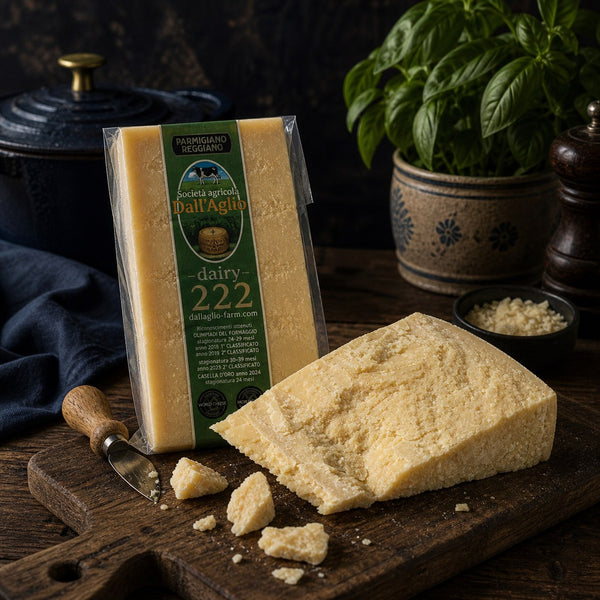
Pecorino Romano is non-negotiable here in a way it is not even in amatriciana: sharp, salty sheep's cheese against sweet pork fat is the entire point of the dish. That said, a portion of Parmigiano Reggiano folded in with the Pecorino gives a rounder, more forgiving emulsion, and many Roman cooks quietly do exactly that.
Ingredients
- 400g rigatoni or spaghetti (both are traditional; rigatoni's ridges hold the sauce well)
- 250g guanciale, cut into batons roughly 1cm thick
- 100g Pecorino Romano, very finely grated, or 70g Pecorino with 30g Parmigiano Reggiano for a gentler finish
- Freshly ground black pepper, a generous amount, coarsely ground
- Salt, sparingly, for the pasta water only
A note on quantities: reckon on 100g of pasta and around 60g of guanciale per person, with 25g of cheese each. The ratios scale cleanly for two or for eight.
Equipment
- A large pot for the pasta
- A wide frying pan, deep enough to toss the pasta through the sauce
- A slotted spoon
- A fine grater or microplane
- A heatproof mug for the reserved pasta water
Method
- Render the guanciale. Place the batons in a cold, dry pan and bring it slowly up to a medium heat. Let the fat melt out gradually, 8 to 10 minutes, until the pieces are deeply golden and crisp at the edges but still tender within. Lift them out with a slotted spoon and set aside, keeping every drop of fat in the pan. Take the pan off the heat.
- Undercook the pasta slightly. Boil the pasta in lightly salted water and pull it two minutes before the packet suggests. Reserve a full mug of the starchy cooking water before draining; it is the second ingredient of your sauce.
- Finish cooking in the fat. Return the pan of guanciale fat to a low heat, add the drained pasta with a good splash of the cooking water, and toss steadily. The pasta finishes cooking here, drinking in the fat while the starch and water begin to emulsify into a light cream.
- Make the pecorino cream. While the pasta tosses, stir a few spoonfuls of the (slightly cooled) pasta water into the grated Pecorino in a bowl until you have a thick, smooth paste. This step is the insurance against clumping.
- Marry off the heat. Take the pan fully off the flame, wait thirty seconds, then fold the pecorino cream through the pasta, tossing constantly and loosening with more pasta water a splash at a time until the sauce is glossy and coats every piece.
- Serve at once. Fold most of the guanciale back through, plate immediately, and finish with the remaining crisp pieces, a final dusting of Pecorino, and a heavy grind of black pepper.
Chef's notes and common mistakes
- Cold pan, always. Starting guanciale in a hot pan seals the surface before the fat can render, leaving it chewy outside and waxy within. Slow heat is the whole technique.
- Heat is the enemy of the cheese. Pecorino added over a flame seizes into strings and knots. The pan comes off the heat, it rests half a minute, then the cheese goes in. Patience here is the difference between cream and clumps.
- Do not salt like usual. Between guanciale and Pecorino Romano, gricia carries more salt than any other Roman pasta. Season the water lightly and add nothing more until you have tasted the finished dish.
- Keep the pasta water. Forgetting it is fatal: there is no other liquid in the dish. A full mug, always, before you drain.
Variations
Gricia tolerates less variation than its descendants, which is part of its charm. Rigatoni, spaghetti, and mezze maniche are all traditional shapes. Blending Parmigiano into the Pecorino is accepted and makes the emulsion easier to hold. Beyond that, additions turn it into a different dish: tomato makes it amatriciana, egg makes it carbonara, and cream, garlic, or onion make it something no Roman would recognise.
Make ahead and storage
Gricia is a dish of the moment and does not truly keep: the emulsion tightens as it cools and never quite returns. What you can do ahead is render the guanciale, holding the crisp pieces and the fat separately at room temperature for a few hours. From there the dish comes together in the time it takes to boil pasta. If you do have leftovers, revive them gently in a pan with a splash of water, accepting that the second serving is a shadow of the first.
Serving and pairing
Serve gricia Roman-style: a first course on its own, generous but not enormous, followed by something green and sharply dressed. For wine, the classic pour is a white from Lazio, a Frascati Superiore, whose freshness cuts the richness cleanly. If you prefer red, a young Cesanese or a light Montepulciano d'Abruzzo will not argue with the pecorino.