


Pedrazzoli Organic Guanciale, Amatriciana al Pepe Nero
- Free gift with every order over £50
- Free delivery on orders over £100
Pork jowl, organic Italian heritage pig, a simple cure of sea salt and black pepper, three months in the cellar. The lean-and-fat ratio that makes the classics work, with nothing added to hurry it.
Guanciale is the cut the old Roman kitchens were built around. Cured pork jowl, not belly: the muscle is leaner, the fat is softer and more aromatic, and when it renders it carries the salt and pepper of the cure through whatever it touches. Carbonara, amatriciana, gricia: none of them work with pancetta, and none of them taste right without guanciale.
The Pedrazzoli family have been curing meat in the Po Valley since 1951, when Arnaldo Pedrazzoli founded the salumificio in the Mantovan village of San Giovanni del Dosso. Three generations on, the business is run by Mauro Pedrazzoli and his cousin Stefano, with the next generation, Emanuele and Elisa, already at work alongside them. In 1996 they launched Primavera, Italy's first fully integrated organic cured-meat line: every stage, from the piglet to the finished salame, certified biologico end to end.
This is the Amatriciana al Pepe Nero from that Primavera Bio range: coated in coarse black pepper, cured with organic ingredients and nothing else. No nitrites, no added preservatives.
Breed & welfare: Italian heritage pork from Pedrazzoli's own integrated organic supply chain. The pigs are reared with outdoor access on organic feed grown to EU biologico standards. The 2025 Guida Salumi d'Italia gave Pedrazzoli its Animal Welfare Pin for exactly this: verifiable outdoor rearing, closed-cycle traceability, no rushed grow-out.
Cure: Dry-cured by hand with sea salt, organic cane sugar, and coarse black pepper, then rested a minimum of three months in temperature-controlled rooms in Mantova. No smoking. No nitrites. No added preservatives, polyphosphates, or glutamate. No added dairy. No gluten in the cure.
Certifications: EU organic (biologico), audited by CCPB, operator number 2195. The salumificio produces 75% of its own energy from on-site photovoltaic, recycles all of its process water from the heat of machinery cooling, and holds ISO 14001 environmental certification. It was recognised with an Animal Welfare Pin and a Green Pin for its company and sustainable chain in the 2025 Guida Salumi d'Italia.
Soft, buttery fat with a distinct rim of lean. Pepper and salt on the nose; the fat melts at hand temperature and carries a clean, sweet pork flavour without any smoke or spice distraction. This is the point of guanciale: the cure should step out of the way and let the pork speak.
How to use it: Cut into small lardons or strips and render slowly in a cold pan. No oil needed; the fat is the sauce. For carbonara, use the rendered fat with the egg and cheese emulsion. For amatriciana, build the tomato over it. For gricia, let it do the whole job with pecorino. Also excellent crisped and scattered on beans, soups, or a simple egg.
The Pedrazzoli Family
San Giovanni del Dosso, Mantova, Italy
Salumificio Pedrazzoli has been in the same family for three generations. Founded by Arnaldo Pedrazzoli in 1951, run today by Mauro Pedrazzoli and his cousin Stefano, with Emanuele and Elisa, the fourth generation, already in the business. They are based in San Giovanni del Dosso, a small agricultural town in Mantova, on the edge of the Po Valley; the salumificio has never moved.
In 1996 they launched Primavera, the first fully integrated organic cured-meat operation in Italy, and still the only one with a closed-cycle supply chain: animals reared on organic feed in a closed-cycle system, slaughter and curing handled in-house, certified biologico by CCPB end to end. In 2025, Italy's Guida Salumi d'Italia recognised Pedrazzoli with an Animal Welfare Pin and a Green Pin for its company and sustainable chain.
“We have always wanted to do things in our own way, without compromise. Organic was not a marketing choice. It was the only way we could guarantee the quality we wanted, from the piglet to the finished product.”
Guanciale is cured pork jowl, the fatty muscle from the cheek. Pancetta is cured pork belly. They are not interchangeable. Guanciale has softer, more aromatic fat with a higher fat-to-lean ratio and a stronger, sweeter flavour; when rendered it produces a silkier emulsion. The classic Roman pastas, carbonara, amatriciana, and gricia, are built on guanciale. Using pancetta instead is a common substitution but it produces a noticeably different dish.
Yes. EU organic certification (biologico), audited by CCPB, operator number 2195. This is Pedrazzoli's Primavera Bio line, launched in 1996 and one of the oldest fully integrated organic cured-meat operations in Italy: certified from the farm where the pigs are reared through to the finished cure. The only ingredients are organic Italian pork cheek, sea salt, organic cane sugar, and organic spices, with a coarse black-pepper coating. No nitrites, no added preservatives.
Yes to both. The cure is sea salt, organic cane sugar, and black pepper only: no wheat-based binders, no lactose, no milk derivatives. Safe for coeliac and dairy-intolerant diets. Check the label on arrival as the formulation of reference.
Energy 625 kcal / 2570 kJ; fat 65g, of which saturates 23g; carbohydrate 0g, of which sugars 0g; protein 8.7g; salt 2.2g.
Cut into lardons (roughly 5 mm by 20 mm) and render in a cold, dry pan over low-medium heat. The fat will melt out in a few minutes. For carbonara: take the pan off the heat, add hot drained pasta and a tablespoon of the cooking water, then fold in the egg-yolk-and-pecorino emulsion. For amatriciana: build tomato, chilli, and a splash of white wine over the rendered guanciale. For a plain egg at breakfast: crisp the lardons first, then fry the egg in the rendered fat.
Shelf life 150 days from production, stored at or below 7 °C. Refer to the best-before date on the vacuum pack. Once opened, wrap tightly in greaseproof paper and refrigerate at 2–4 °C; use within 2–3 weeks. Guanciale can be frozen in portioned lardons; use within 3 months for best texture.
Shipped chilled. Free standard delivery on orders over £100. Express next-day delivery available at checkout. We do not accept returns on food products.
Free UK delivery on orders over £100. Standard delivery 2–4 business days. Express options available at checkout. Returns accepted within 28 days.
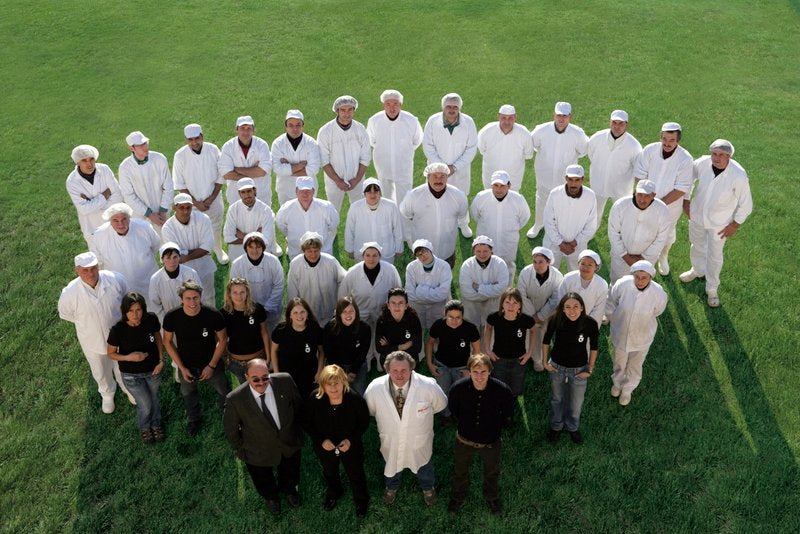
“We have always wanted to do things in our own way, without compromise. Organic was not a marketing choice. It was the only way we could guarantee the quality we wanted, from the piglet to the finished product.”
Guanciale is the cut the old Roman kitchens were built around. Cured pork jowl, not belly: the muscle is leaner, the fat is softer and more aromatic, and when it renders it carries the salt and pepper of the cure through whatever it touches. Carbonara, amatriciana, gricia: none of them work with pancetta, and none of them taste right without guanciale.
The Pedrazzoli family have been curing meat in the Po Valley since 1951, when Arnaldo Pedrazzoli founded the salumificio in the Mantovan village of San Giovanni del Dosso. Three generations on, the business is run by Mauro Pedrazzoli and his cousin Stefano, with the next generation, Emanuele and Elisa, already at work alongside them. In 1996 they launched Primavera, Italy's first fully integrated organic cured-meat line: every stage, from the piglet to the finished salame, certified biologico end to end.
This is the Amatriciana al Pepe Nero from that Primavera Bio range: coated in coarse black pepper, cured with organic ingredients and nothing else. No nitrites, no added preservatives.
Breed & welfare: Italian heritage pork from Pedrazzoli's own integrated organic supply chain. The pigs are reared with outdoor access on organic feed grown to EU biologico standards. The 2025 Guida Salumi d'Italia gave Pedrazzoli its Animal Welfare Pin for exactly this: verifiable outdoor rearing, closed-cycle traceability, no rushed grow-out.
Cure: Dry-cured by hand with sea salt, organic cane sugar, and coarse black pepper, then rested a minimum of three months in temperature-controlled rooms in Mantova. No smoking. No nitrites. No added preservatives, polyphosphates, or glutamate. No added dairy. No gluten in the cure.
Certifications: EU organic (biologico), audited by CCPB, operator number 2195. The salumificio produces 75% of its own energy from on-site photovoltaic, recycles all of its process water from the heat of machinery cooling, and holds ISO 14001 environmental certification. It was recognised with an Animal Welfare Pin and a Green Pin for its company and sustainable chain in the 2025 Guida Salumi d'Italia.
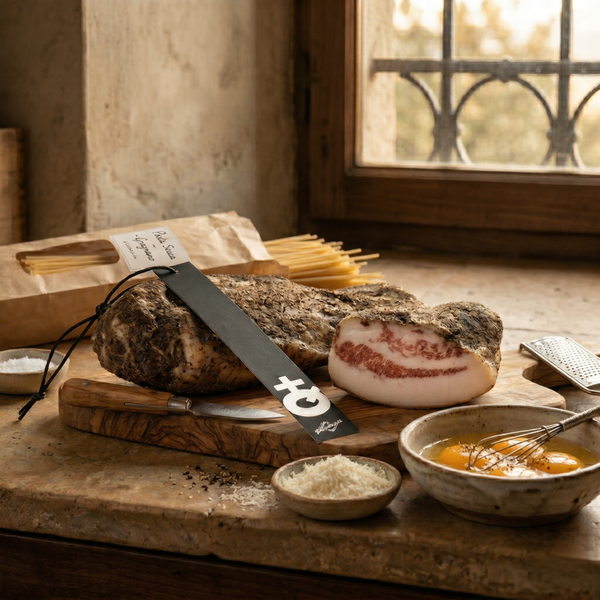
Mantova, Italy
Pedrazzoli Carrobbio Guanciale
Guanciale from the Pedrazzoli family's Q+ line, their small-batch premium range. A whole 1.5kg jowl, dry-cured with salt...
£30.00
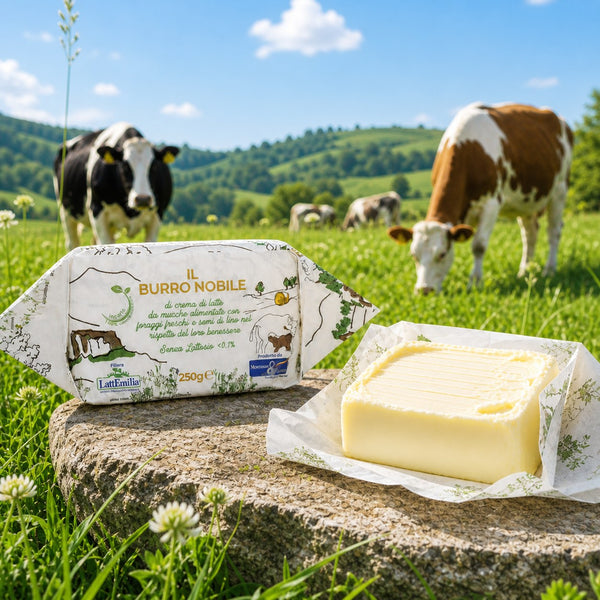
Reggio Emilia, Italy
Burro Nobile, Premium Italian Butter
Premium Italian butter made from the fresh cream skimmed from milk destined for Parmigiano Reggiano, the same herds,...
£5.00
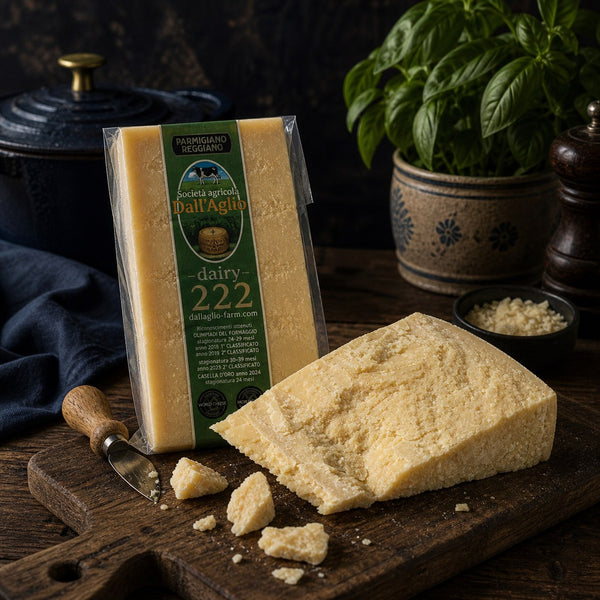
Free Standard Delivery
On all orders over £100
Free Gift
On all orders over £50
10% Off Subscriptions
Save on every recurring order