
There is a particular kind of confidence in serving oysters out of the shell, dressed and rested, rather than raw on ice with a wedge of lemon. This salad does exactly that. The oysters are loosened from their shells, mingled with cucumber, celery, shallot and rocket, and brought together by two things that decide the entire dish: a long-aged traditional balsamic and a generous pour of good olive oil. Everything else is supporting cast.
What makes it work is restraint and timing. The balsamic is not poured on at the end as a flourish. It goes in early, with the salt, and is given half an hour to draw out the sweetness of the oysters and soften the raw allium. By the time the rocket and Parmigiano arrive, the dressing has already done its quiet work.
Why the balsamic matters
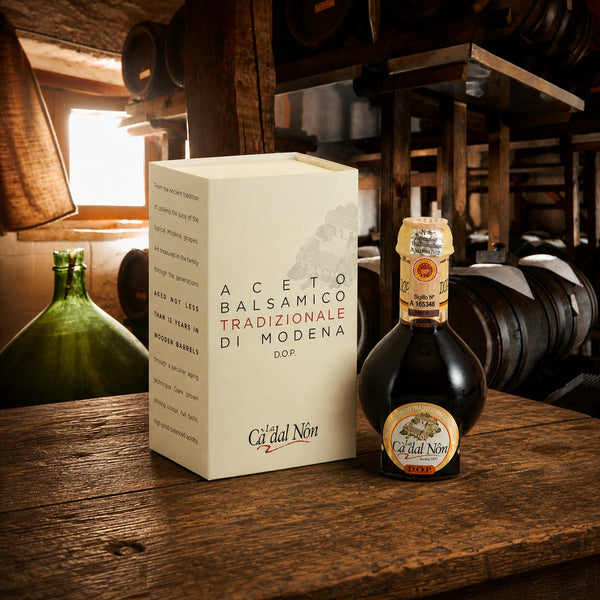
The dressing here leans on La Cà dal Nôn Aceto Balsamico Tradizionale di Modena DOP, aged twelve years. This is not the thin, sharp vinegar sold for everyday salad. Traditional balsamico of this age is dense, syrupy and layered, sweet at the front and gently acidic at the close, with the long woody depth that only years in a cask can give. Against the briny coolness of raw oyster, that sweetness is the whole point. It rounds the salinity, lifts the cucumber and celery, and stops the dish from tasting merely of the sea.
The olive oil, three tablespoons of Nikkitas Extra Virgin, carries the balsamic across every element and adds a peppery, grassy weight that an oyster salad otherwise lacks. Use a vinegar that is genuinely aged and an oil you would happily taste from a spoon. With only nine ingredients and no heat to hide behind, there is nowhere for a poor one to disappear.
Ingredients
- 18 oysters, the freshest you can find, shells tightly closed before opening
- 2 tbsp La Cà dal Nôn Aceto Balsamico Tradizionale di Modena DOP (12 years), for the marinade
- 3 tbsp Nikkitas Extra Virgin Olive Oil, to finish
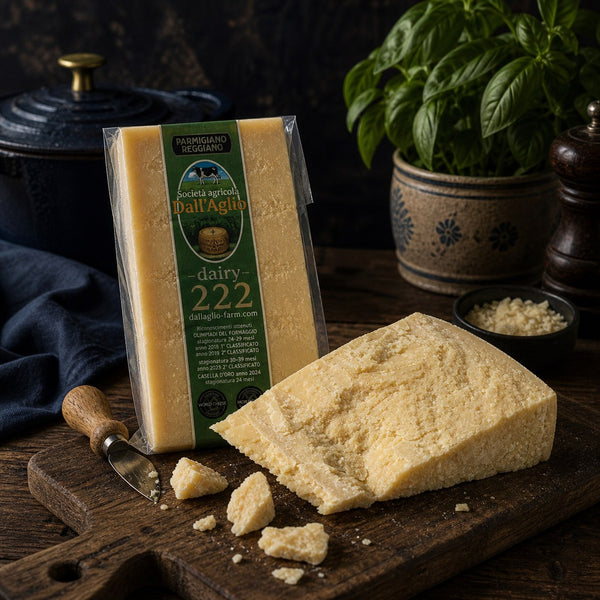
- 40g Dall'Aglio Parmigiano Reggiano DOP (24 months), shaved into flakes
- 1 cucumber, sliced into thin rounds
- 1 stick celery, finely chopped
- 1 shallot, finely chopped
- A handful of rocket, washed and dried
- A pinch of salt, used sparingly given the natural salinity of the oysters
A note on substitutions: a younger traditional balsamic will work, though you lose some of the syrupy depth, so reduce the quantity slightly and taste as you go. If celery feels too assertive, fennel sliced wafer-thin gives a softer, aniseed note that suits the oysters beautifully.
Equipment
- An oyster knife, and a folded cloth or oyster glove to protect the hand holding the shell
- A mixing bowl large enough to hold all the ingredients with room to toss
- A sharp knife and a chopping board
- A vegetable peeler or mandoline for the Parmigiano flakes and even cucumber rounds
- A small brush or clean cloth for scrubbing the oyster shells
Method
- Clean and open the oysters. Scrub the shells under cold running water to remove grit, then open each one carefully with an oyster knife, working the tip into the hinge and twisting rather than forcing. Tip the meat into a bowl, keeping any clear liquor that comes with it. Discard any oyster that smells wrong or was open before shucking.
- Prepare the aromatics. Finely chop the celery and shallot. Chopping them small lets them marinate evenly and keeps any single bite from turning sharp. Slice the cucumber into thin rounds so it stays crisp and does not weep.
- Build the marinade. Add the celery, shallot and cucumber to the oysters. Season with a pinch of salt and the two tablespoons of balsamic. The salt and acid begin to firm the oyster meat slightly and draw out its sweetness, while softening the raw bite of the shallot.
- Rest for thirty minutes. Cover the bowl and leave it in the fridge to marinate. This pause is not idle. It is when the balsamic moves through every element and the flavours settle into one another. Do not skip it.
- Add the leaves. Wash and dry the rocket, then fold it through the oysters along with all of the marinade. Drying the rocket properly matters, as wet leaves dilute the dressing you have just spent half an hour building.
- Finish and serve. Scatter over the Parmigiano flakes, drizzle with the three tablespoons of olive oil, and serve at once. The oil should be the final touch so its aroma stays bright on the plate.
Chef's notes and common mistakes
- Freshness is non-negotiable. These oysters are served raw and barely dressed. Buy them live, with tightly closed shells, and use them the same day. If one is open and does not close when tapped, throw it away.
- Reserve the oyster liquor. The clear liquid inside the shell carries pure sea flavour. Letting it into the bowl deepens the dish at no cost.
- Go easy on the salt. Oysters, Parmigiano and the sea itself bring plenty of salinity. Add a pinch, taste at the end, and adjust only then.
- Do not over-marinate. Thirty minutes brings the dish together. Much longer and the acid begins to toughen the oysters and the cucumber loses its crispness.
- Dress with the oil last. Adding the olive oil before the rest dulls its perfume. It belongs on top, at the table.
Variations
The frame is forgiving once you respect the balsamic and the resting time. Swap the rocket for watercress if you want a sharper, more peppery green, or for thin ribbons of fennel for something gentler and more aromatic. A few segments of pink grapefruit or blood orange bring a citrus brightness that flatters both the oyster and the aged vinegar. For a sparer version, leave out the Parmigiano altogether and let the balsamic and oil stand alone against the oysters.
Make ahead and storage
This is a dish to assemble and eat, not to keep. You can prepare every component in advance, chopping the celery, shallot and cucumber and shaving the Parmigiano up to a few hours ahead, but the oysters should be opened only when you are ready to marinate. Once the salad is dressed it does not hold. The leaves wilt, the oil dulls and the texture slips within the hour. Make only what you will serve.
Serving and pairing
Serve the salad cold, in shallow bowls, as a first course or a light lunch with bread alongside to catch the dressing. For wine, the natural partner is a crisp, mineral white with the acidity to meet the brine and the balsamic. A glass of Muscadet sur lie or a dry Chablis is ideal, both lean and saline enough to sit cleanly beside the oysters. A bone-dry Champagne or a good Franciacorta makes the dish feel like an occasion.