
This is a plate built on contrast. A small tangle of glossy spaghetti, three scallops seared to a deep gold, and two caviars crowning the top: black pearls of Attilus Royal Oscietra for their clean, briny depth, and a scattering of bright red salmon or flying-fish roe for colour and a quick pop of the sea. It looks like restaurant food and reads like luxury, yet it comes together in twenty minutes with very little on the stove.
The discipline here is restraint. The pasta is dressed simply with good olive oil and a little starchy water, the scallops are left almost alone in the pan, and the caviar is added at the very last second, never cooked. Get those three things right and the dish needs nothing more.
Why the caviar matters
The Royal Oscietra from Attilus is the centre of gravity on this plate. It is premium, sustainably farmed caviar with firm, glossy pearls and a flavour that is clean and gently nutty rather than aggressively salty. Spooned over warm, oil-slicked spaghetti, it releases a saline depth that ordinary seasoning cannot reach, and because the pearls are added off the heat they keep their shape and their distinct, fleeting burst.
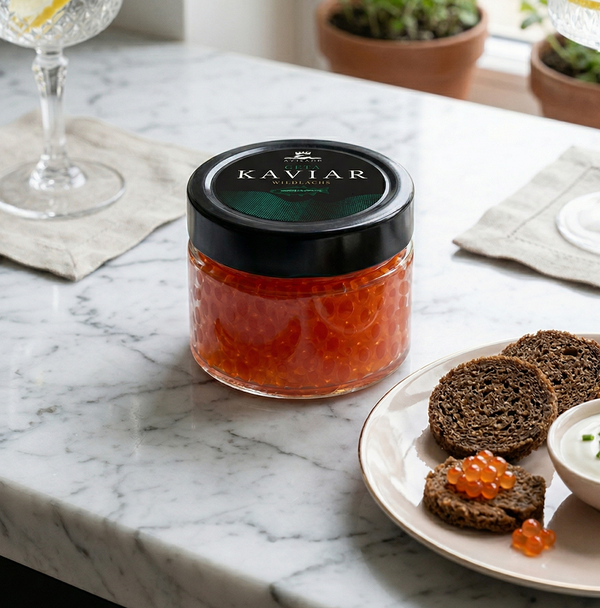
The second caviar, red salmon or flying-fish roe, plays a different role. It is brighter, sweeter, and more about texture and colour than depth. Keeping the two separate on the plate, black over the pasta and red to the side, lets each speak for itself. Treat both with the same care: serve them well chilled, lift them with a mother-of-pearl, bone, or horn spoon rather than metal, which can taint the flavour, and add them only at the very end so they are never warmed through.
Ingredients
- 100g good Italian spaghetti, bronze-die if you can find it, for a rougher surface that holds the oil
- 3 large scallops, cleaned and patted very dry
- 1 tbsp Attilus Royal Oscietra caviar, kept well chilled until the last moment
- 1 tbsp red flying-fish or chum salmon caviar, for colour and contrast
- 2 tbsp extra virgin olive oil, plus a little extra to finish
- 1 small garlic clove, finely chopped (optional)
- A handful of baby spinach (optional), for freshness alongside
- Fine sea salt and freshly ground black pepper, to taste
- 1 lemon wedge, to serve
A note on quantities: this is written as a single, generous portion, the kind of thing you make for yourself or for one other person on a quiet evening. It doubles cleanly. Keep the same ratio of pasta to oil and scale the scallops at three per person, but be guided by appetite rather than arithmetic with the caviar, where a little extra is rarely a mistake.
Equipment
- A generous pot for the pasta
- A heavy frying pan or skillet for searing the scallops
- Tongs, and a heatproof jug or mug for the reserved pasta water
- Kitchen paper for drying the scallops thoroughly
- A mother-of-pearl, bone, or horn spoon for the caviar, never metal
- A warm plate, ready before you start to combine
Method
- Cook the pasta. Bring a generous pot of well-salted water to a rolling boil and add the spaghetti. Cook until just al dente, with a little bite still left in it, since it will be tossed again with oil and water. Reserve a full mug of the starchy cooking water before you drain, then drain.
- Dress the pasta. Return the spaghetti to the warm pot off the heat. Add the olive oil, a splash of the reserved pasta water, salt, and pepper, and toss until the strands turn glossy and lightly emulsified. The starch in the water binds the oil into a loose sauce that clings to the pasta instead of sliding off.
- Sear the scallops. Heat a heavy pan over a medium-high heat. Add a thread of olive oil and the optional garlic, letting it perfume the oil for a few seconds without colouring. Pat the scallops dry once more, season, and lay them in the pan. Sear for about 90 seconds on each side, until deeply golden. A dry scallop and a properly hot pan are what give you a caramelised crust rather than a pale, steamed one, so do not crowd the pan or move them early.
- Plate. Twist the dressed spaghetti into a tall mound on a warm plate, using tongs to lift and turn it so it stands rather than spreads. Place the scallops on top of or alongside the pasta.
- Crown with caviar. With a non-metallic spoon, place the black Attilus caviar over the pasta and the red caviar to the side, keeping the two distinct so each colour and flavour stays its own. Add them now, off all heat, so the pearls stay cool and intact.
- Finish. Tuck the spinach alongside if using, give a final thread of olive oil and a squeeze of lemon, and serve immediately while the scallops are hot and the caviar is cold.
Chef's notes and common mistakes
- Never let the caviar near the heat. It is a garnish, not an ingredient to cook. Heat dulls its flavour and bursts the pearls into a paste. Add it at the table if you like, once everything else is plated.
- Dry the scallops, then dry them again. Surface moisture is the enemy of a good sear. A wet scallop steams and turns grey; a dry one in a hot pan builds the golden crust that makes the dish.
- Keep the pasta loose. Reserve more cooking water than you think you need. It is far easier to slacken a tight pasta with a spoonful of water than to rescue one that has gone dry and clumped.
- Go gently with salt. Both caviars carry their own salinity. Season the pasta and scallops with a light hand and let the caviar do the rest, tasting before you reach for more.
Variations
The frame of this dish welcomes small changes. Prawns or a few slices of lobster tail can stand in for the scallops, seared the same way. A little lemon zest folded through the pasta brightens it without competing with the caviar. If you prefer a single caviar, the black Oscietra alone is more than enough, though you lose the colour the red roe brings. For a richer base, a knob of cold butter tossed through the hot pasta with the oil gives a more velvet finish, but keep it restrained: the caviar should remain the loudest voice on the plate.
Make ahead and storage
This is a dish to make and eat at once, not to hold. You can, however, prepare every component so the final assembly takes minutes: clean and dry the scallops, wash the spinach, and bring the caviar out of the refrigerator only at the last moment so it stays well chilled. The pasta and scallops do not keep well once cooked, and the caviar should never be reheated. An unopened tin of Attilus caviar will keep in the coldest part of the refrigerator until its stated date; once opened, eat it within a day or two and always keep it cold and tightly closed.
Serving and pairing
Serve this as a light main or an elegant starter, on its own, with nothing more than the lemon wedge and perhaps the spinach alongside. For wine, caviar and Champagne is the natural and time-honoured match: a dry, crisp brut cuts the richness of the seared scallops and frames the saline pearls beautifully. If you would rather a still white, choose something taut and mineral, a Chablis or a good Muscadet, both of which carry the same clean acidity without overwhelming the delicacy of the dish.