
There is a particular kind of cooking that is barely cooking at all. No heat, no transformation, only the arrangement of a few exceptional things on a plate and the good sense to leave them alone. Burrata with balsamic and honey belongs to this quiet category. It takes five minutes, asks for no technique to speak of, and yet it can hush a table the way few elaborate dishes manage.
The catch, and there is always a catch, is that a dish this simple has nowhere to hide. Every ingredient is tasted plainly and on its own terms. Choose well and the result is luminous. Cut a corner and the plate tells on you at once.
Why the balsamic matters
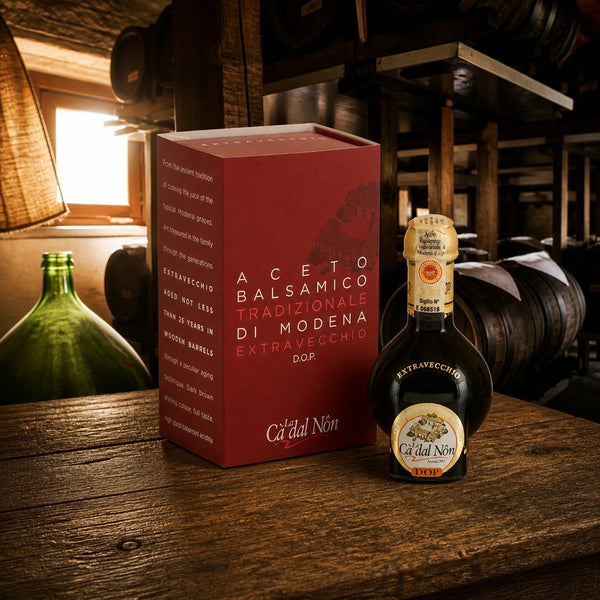
The single drop that defines this dish is the balsamic. Most bottles labelled balsamic are young, sharp, and thinned with grape must or caramel, useful enough for a salad but far too aggressive here. What you want is traditional aged balsamic of Modena, the kind made by the old method and protected by DOP, in which cooked grape must is matured for years across a battery of wooden casks until it turns dark, syrupy, and almost sweet. La Cà dal Nôn produces exactly this, a balsamic with the density of treacle and a flavour that moves from fig to wood to a clean acidic lift at the finish. It does not sting. It rounds.
Against the cool milky burrata, that aged balsamic does two things at once. Its acidity cuts the richness of the cream so the cheese never cloys, and its caramelised depth answers the floral sweetness of the honey rather than fighting it. A drop or two is all the plate can carry. This is why the cheaper, thinner vinegars fail the dish: they would have to be poured to register, and pouring drowns it. Reach for the Greek honey here as the balsamic's partner, raw and gently floral, a softer sweetness that keeps the whole thing from tipping into the savoury.
Ingredients
- 1 large burrata (approximately 200g), at room temperature
- 1 to 2 tsp traditional aged balsamic of Modena DOP
- 1 tsp raw honey, ideally a floral Greek honey
- 2 tbsp extra virgin olive oil
- A handful of rocket (arugula)
- Flaky sea salt and freshly cracked black pepper, to taste
- Crusty bread, to serve
A note on substitutions: if burrata is unavailable, a good buffalo mozzarella will stand in, though you lose the molten stracciatella centre that makes burrata what it is. The rocket can give way to young watercress or torn basil. The balsamic and the honey, however, are the heart of the plate and reward the best you can find.
Equipment
- A serving plate, wide and shallow
- A small spoon for dotting the balsamic
- A teaspoon for drizzling the honey
- A bread knife
Method
- Lay the bed. Arrange the rocket loosely across the plate. A bed rather than a heap, so the burrata sits proud at the centre and the leaves catch the oil and balsamic that run from it.
- Open the burrata. Set the burrata in the middle and tear it open gently so the creamy interior spills out. Tearing rather than slicing lets the soft stracciatella release on its own, which is the whole point of the cheese. Bring it to room temperature first; cold mutes both the cream and the aromas.
- Dress with oil. Drizzle the olive oil generously over and around the burrata. The oil carries flavour and gives the plate its gloss, and it cushions the acidity of the balsamic to come.
- Dot the balsamic. Drop the balsamic vinegar in small dots over the cheese. A few drops go a long way with DOP balsamic, so resist the urge to pour. You are seasoning with it, not sauceing.
- Add the honey. Drizzle the honey in a thin stream over the top. Keep it light and let it fall in ribbons rather than pools, so each forkful finds a little sweetness without being overwhelmed.
- Season and serve. Finish with flaky salt and cracked pepper. The salt wakes the cream, the pepper gives a faint warmth. Serve immediately, with crusty bread for tearing and dipping into the pooled oil and balsamic.
Chef's notes and common mistakes
- Never serve burrata cold. Straight from the fridge it is dense and flavourless. Twenty minutes at room temperature transforms it.
- Do not pour the balsamic. The most common error is treating aged balsamic like a dressing. Dot it, taste, and add more only if the plate genuinely needs it.
- Mind the salt. Burrata is delicately seasoned already. Flaky salt is there for texture and a clean saline lift, not for heavy seasoning.
- Assemble at the last moment. The burrata weeps as it sits, and the rocket wilts under oil. This is a dish to build and bring straight to the table.
Variations
The template invites quiet embellishment. Ripe summer tomatoes, sliced thick and salted, turn this into a fuller starter. Slow-roasted figs or grilled peaches lean into the honey and make it feel autumnal. A scatter of toasted pine nuts or chopped pistachios adds welcome crunch against the cream. For a herbal note, torn basil in summer or a few thyme leaves at any time of year sit well alongside the balsamic. What does not change is the restraint: one or two additions, never a crowd.
Make ahead and storage
This is not a dish to prepare in advance. Burrata is at its best the day it is bought and assembled the moment it is served, so the plan ahead is simply timing: take the cheese from the fridge twenty minutes before you intend to eat. If you have leftovers, which is rare, the torn burrata will keep covered in the fridge for a day but will continue to weep and soften, and it is best folded into a salad or spread on toast rather than served again as it was. The balsamic and honey keep indefinitely in the cupboard.
Serving and pairing
Serve this as a starter or as part of a wider antipasto spread, with the crusty bread doing the work of carrying every last streak of oil and balsamic from the plate. For wine, a chilled glass of Franciacorta or a dry Italian sparkling wine flatters the creamy richness beautifully, its bubbles and acidity echoing the cut of the balsamic. If you prefer still wine, a crisp Soave or a young Verdicchio will do the same with quiet grace.