
This is a dish of contrasts held in balance. Blackened shrimp carry a dark, smoky char and a slow build of heat, while beneath them a soft Parmigiano polenta turns the whole plate calm and golden. The pan sauce, sharpened with wine and lemon and a little Worcestershire, ties the two together. Then, at the very end, a few drops of aged balsamic land like punctuation, sweet and dark and concentrated, lifting everything it touches.
It looks elaborate and tastes as though it should have taken all afternoon, yet it comes together in around forty minutes. The trick is sequence: a polenta that quietly minds itself while you give the shrimp the brief, fierce heat they need.
Why the balsamic matters
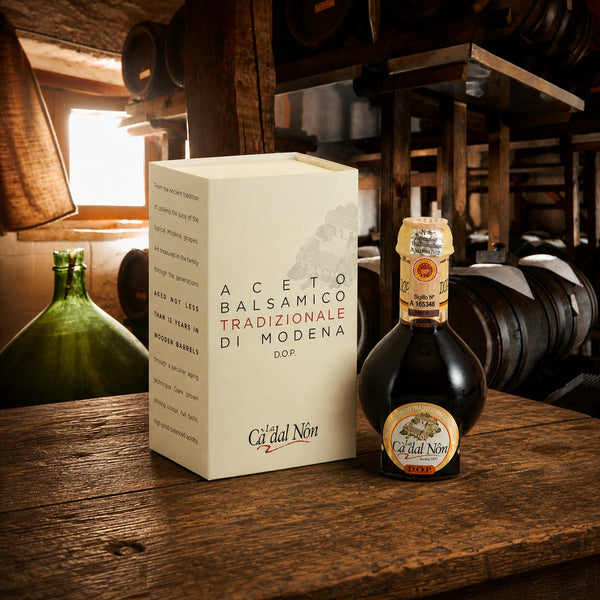
A spice rub this assertive could easily flatten a dish, driving everything in one smoky, peppery direction. The finishing drizzle is what stops that happening. La Cà dal Nôn Balsamic Vinegar DOP, the traditional aged balsamic of Modena, is not the thin, sharp condiment most cooks reach for. Years in a succession of wooden casks reduce it to something thick, glossy, and almost syrupy, with a depth that runs from sweet to gently sour and back again.
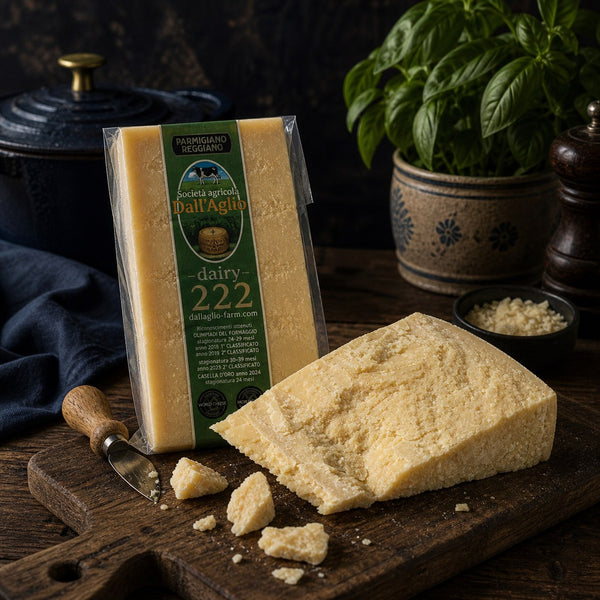
Used here in drops rather than spoonfuls, it cuts cleanly through the richness of the butter and the warmth of the blackening spice. It also answers the salinity of the Parmigiano in the polenta, a Dall'Aglio Parmigiano Reggiano DOP whose nutty, crystalline character is the natural partner to good balsamic. Add it only at the table, off the heat. Its perfume is delicate and a hot pan would burn off the very thing you want.
Ingredients
For the polenta
- 1 cup polenta
- 4 cups chicken broth, warm
- 1 tbsp extra virgin olive oil
- Parmigiano Reggiano DOP (24 months), grated, to taste, ideally Dall'Aglio
- Sea salt, to taste
For the shrimp
- 200g raw shrimp, peeled and deveined
- 2 cloves garlic, thinly sliced
- 1 shallot, finely chopped
- 1/4 each red, green and yellow pepper, finely chopped
- 8 cherry tomatoes, halved
- Juice of 1/2 lemon
- 1 tsp red wine vinegar
- 1 glass dry white wine
- 2 dashes Tabasco sauce
- 1 tsp Worcestershire sauce
- 20g butter
- 1 tsp aged balsamic vinegar, to finish, La Cà dal Nôn Balsamic Vinegar DOP
- Fresh watercress, to serve
For the blackening seasoning (combine 1 tsp of each)
- Cayenne pepper, celery salt, garlic powder, onion powder, smoked paprika, dried herbs, fine sea salt and black pepper
A note on substitutions: vegetable stock stands in cleanly for chicken broth if you prefer, and a good aged red wine vinegar can stretch in place of the balsamic at the finish, though it will give brightness rather than the dark sweetness that defines the dish. If you cannot find watercress, rocket brings a similar peppery lift.
Equipment
- A blender, for refining the polenta grain
- A heavy saucepan for the polenta
- A whisk and a wooden spoon
- A large, heavy frying pan or skillet
- A fine grater or microplane for the Parmigiano
- Tongs, and two warmed serving bowls
Method
- Make the polenta. Pulse the dry polenta briefly in a blender to refine the grain. This shortens the cooking time and gives a smoother, more even texture. Bring 3 cups of the chicken broth to a gentle simmer, then whisk in the polenta in a steady stream and lower the heat. Add the remaining broth gradually and keep stirring for around 15 minutes, until the polenta is thick and silky. The slow addition of liquid is what lets each grain swell evenly rather than seizing.
- Finish the polenta. Off the heat, stir in the olive oil, a generous handful of grated Parmigiano and sea salt to taste. Cover and rest for 5 minutes. Resting lets the grains relax and the cheese melt fully through. Keep warm while you cook the shrimp.
- Season and sear the shrimp. Toss the shrimp with the blackening seasoning until evenly coated. Heat a large pan over medium-high with a little oil and sear the shrimp for about a minute on each side, until just browned. The spice crust needs a hot, dry-ish pan to darken without the shrimp overcooking, so resist crowding the pan. Transfer to a plate.
- Build the sauce. In the same pan, soften the garlic and shallot in the residual fat. Add the peppers and tomatoes and cook briefly to draw out their sweetness. Deglaze with the white wine and red wine vinegar, scraping up the dark fond left by the shrimp, then add the lemon juice, Tabasco and Worcestershire. Reduce until glossy. That fond is pure flavour and the wine lifts it back into the sauce.
- Bring it together. Return the shrimp to the pan, add the butter and toss to coat. The butter emulsifies the reduced sauce into something silky that clings to the shrimp. Spoon the warm polenta into the warmed bowls, top with the shrimp and pan sauce, then finish with a few drops of the aged balsamic and a small handful of watercress.
Chef's notes and common mistakes
- Do not overcook the shrimp. A minute a side is usually enough. They will carry on cooking in the warm pan sauce, and shrimp turn rubbery the moment they pass their best.
- Keep stirring the polenta. Left alone it catches and lumps on the base of the pan. A steady hand for those 15 minutes is the difference between silk and porridge.
- Add the balsamic last and off the heat. A traditional aged balsamic is finishing condiment, not a cooking ingredient. Heat dulls its perfume and wastes a precious thing.
- Taste before salting. Celery salt and fine salt sit in the rub, Parmigiano brings its own, and the Worcestershire adds more still. Season the polenta lightly and check at the end.
- Warm your bowls. Polenta stiffens fast as it cools. Warm bowls keep the dish loose and generous all the way to the last spoonful.
Variations
The polenta takes happily to other hard cheeses if you want a sharper or saltier base, though Parmigiano remains the most balanced choice. For a milder plate, ease back on the cayenne in the rub and lean on the smoked paprika for colour and warmth without the heat. Scallops or firm white fish can stand in for the shrimp, given the same brief, fierce sear. And for those who like more freshness, a scatter of chopped flat-leaf parsley alongside the watercress brightens the finish further.
Make ahead and storage
The blackening seasoning can be mixed days in advance and kept in a sealed jar. The polenta is best made fresh, but it will hold, covered and warm, for half an hour or so, and a splash of hot broth will loosen it back to a pourable softness if it stiffens. The shrimp and pan sauce want to be cooked and eaten straight away. Any leftovers keep refrigerated for a day, though the shrimp lose their edge on reheating, so warm them gently and only briefly. Hold the balsamic until the moment of serving in every case.
Serving and pairing
Serve in warmed shallow bowls, the polenta first and the shrimp piled on top so the pan sauce runs down into it. A little extra watercress on the side keeps the plate fresh. For wine, reach for the same style of dry white you used in the sauce: a Verdicchio or a Soave has the brightness and faint almond note to meet the smoky spice without competing with it, while its acidity echoes the balsamic at the finish. A lightly chilled, low-tannin red such as a young Lambrusco, fittingly from the same corner of Emilia as the balsamic, makes a more unexpected but very happy match.