

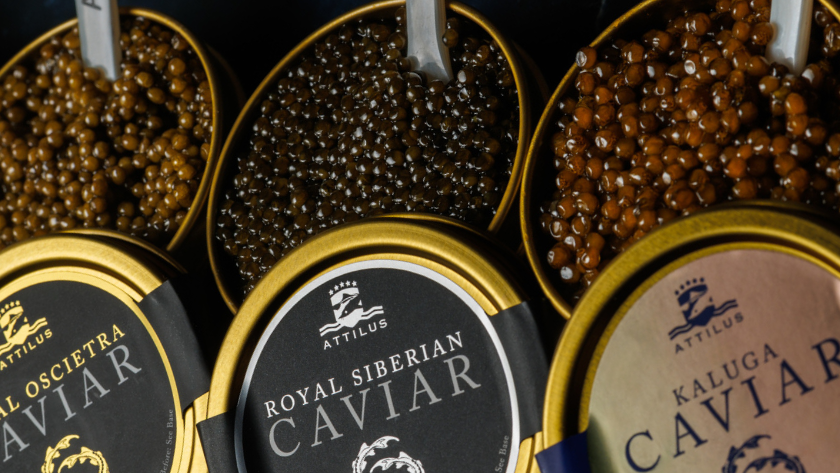
Caviar comes in more varieties than most people realise. Here's a straightforward breakdown of the eight main types.
- Beluga. The largest and most well-known caviar, with big, soft pearls and a rich, buttery flavour. It takes over a decade to mature, which is why it's the most expensive. Now primarily farmed.
- Oscietra. A popular high-end option with nutty, creamy flavour. Pearl colour ranges from dark brown to gold, with lighter colours coming from older fish.
- Siberian (Baerii). A good starting point for anyone new to caviar. Smooth and creamy with a mild, oyster-like brininess. More widely farmed and more accessible than the top-tier varieties.
- Sevruga. Small pearls with a bold, briny, full-bodied flavour. One of the more intense options among traditional Caspian caviars.
- Kaluga. Sometimes called the "river Beluga" due to the size of the sturgeon it comes from. Large, firm pearls with a buttery, lightly nutty taste. A common alternative to Beluga.
- Amur. Medium-sized pearls in amber and olive tones. Creamy and mildly nutty, with balanced salinity. Widely used in professional kitchens for its versatility.
- Sterlet. From one of the smaller sturgeon species. Tiny, silky pearls with a mild, slightly sweet flavour. Often compared to Sevruga but more delicate.
- Almas. Produced from albino Sterlet sturgeon. The pearls are a distinctive pale gold. The flavour is very delicate and subtle. One of the rarest caviars available.
The main differences come down to pearl size, colour, intensity of flavour, and rarity. Beluga sits at the luxury end; Siberian is the most approachable entry point.
