
A good balsamic vinaigrette is the small skill that quietly improves everything you eat. Once you can make one in the time it takes to wash a head of leaves, the bottled stuff, thickened with gums and sweetened with concentrate, loses all its appeal. The formula is old and forgiving: roughly three parts oil to one part vinegar, a little mustard to hold it together, a touch of sweetness to round it, and salt and pepper to finish. Everything after that is preference.
What separates a memorable vinaigrette from a merely adequate one is not technique but the two ingredients you cannot fake: the oil and the vinegar. Both go in raw and unheated, so their quality is the flavour of the finished dressing, nothing more and nothing less.
Why the balsamic matters
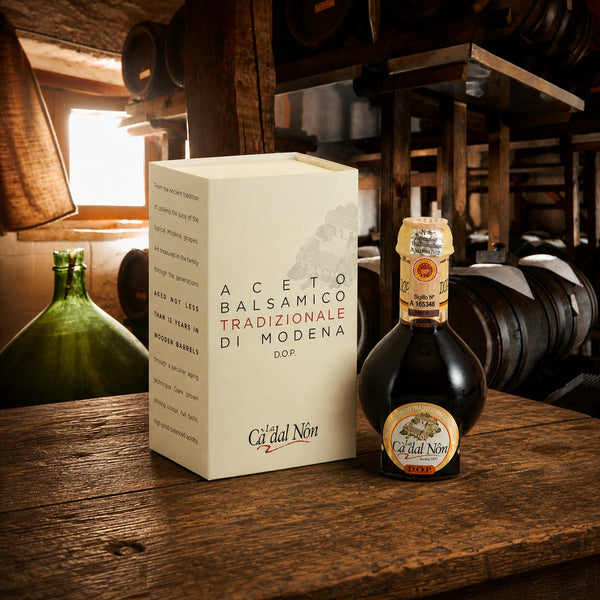
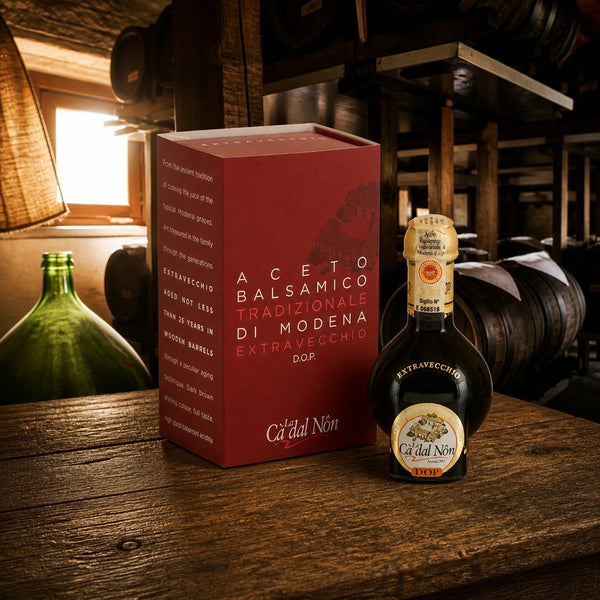
In a vinaigrette the balsamic does two jobs at once: it is the acid that lifts the leaves and the sweetness that balances the oil. A traditional aged balsamic is already syrupy and mellow, so it brings roundness a thin, sharp supermarket vinegar cannot, and you need less honey to balance it. There is no cooking here, which is exactly why an aged balsamic shines: its fig and molasses depth goes in untouched. Use the twelve-year for everyday dressing and a few drops of an older bottle when the salad is the centre of the meal.
Ingredients
- 6 tablespoons extra virgin olive oil
- 2 tablespoons aged balsamic vinegar
- 1 teaspoon Dijon mustard
- 1 teaspoon honey, or to taste
- 1 small clove garlic, finely grated, optional
- Salt and freshly ground black pepper
Equipment
- A small bowl and a whisk, or a jar with a tight lid
Method
- Start with the base. In the bowl, whisk together the balsamic, mustard, honey, grated garlic if using, and a good pinch of salt until smooth. Getting these to combine first is what lets the dressing emulsify.
- Add the oil slowly. Whisking constantly, pour in the olive oil in a thin, steady stream. The dressing will thicken and turn glossy as it emulsifies.
- Season and taste. Add black pepper, taste on a leaf, and adjust: more balsamic for sharpness, more honey for roundness, more salt if it falls flat.
- Or just shake. For a faster version, put everything in a jar, seal, and shake hard for twenty seconds. It emulsifies almost as well.
Chef's notes and common mistakes
- Mustard is the glue. It emulsifies the oil and vinegar so the dressing stays creamy rather than splitting into a slick and a puddle. Do not skip it.
- Dress at the last minute. Leaves wilt fast once dressed. Toss just before serving, and use less than you think: the leaves should glisten, not drip.
- Taste on a leaf, not a spoon. A vinaigrette always tastes sharper alone than it does on greens. Judge it the way you will eat it.
- Ratio, then instinct. Three to one oil to vinegar is the starting point, not a rule. Sharpen or soften it to your own palate.
Variations
Swap the honey for maple syrup, or add a spoon of finely chopped shallot for bite. A little chopped thyme or oregano turns it herbal; a spoon of grated Parmigiano makes it richer and more savoury. For a creamy balsamic dressing, whisk in a tablespoon of mayonnaise or Greek yoghurt. The base is endlessly adaptable, which is the whole point of learning it.
Make ahead and storage
Balsamic vinaigrette keeps beautifully: store it in a sealed jar in the fridge for up to two weeks. The oil will firm and cloud when cold, so take it out twenty minutes before serving and shake to bring it back together. If you added fresh garlic, use it within a few days, as raw garlic sharpens over time.
Serving and pairing
This is the house dressing for any green salad, but it goes far beyond leaves: spoon it over roasted vegetables, grilled chicken, ripe tomatoes, or a plate of sliced mozzarella. It is especially good on bitter leaves like rocket and radicchio, where the sweetness of the balsamic and the bite of the greens play off each other. Make a jar at the start of the week and everything you eat gets a little better.