
Balsamic-glazed salmon is a weeknight favourite for good reason: rich, tender fish against a dark, sweet-sharp glaze is a combination that always works, and it comes together in the time it takes to cook rice. Most recipes ask you to simmer cheap balsamic with sugar into a sticky reduction. With a traditional aged balsamic you can skip that step entirely, because the vinegar is already thick, glossy and sweet from its years in the barrel. You are not making a glaze; you are pouring one.
That shortcut is also the secret to the dish tasting better than the usual version. A reduction of industrial balsamic turns harsh and one-dimensionally sweet as it cooks down. A finishing drizzle of real aged balsamic keeps all its fruit and complexity, because it never sees the heat that would flatten it.
Why the balsamic matters
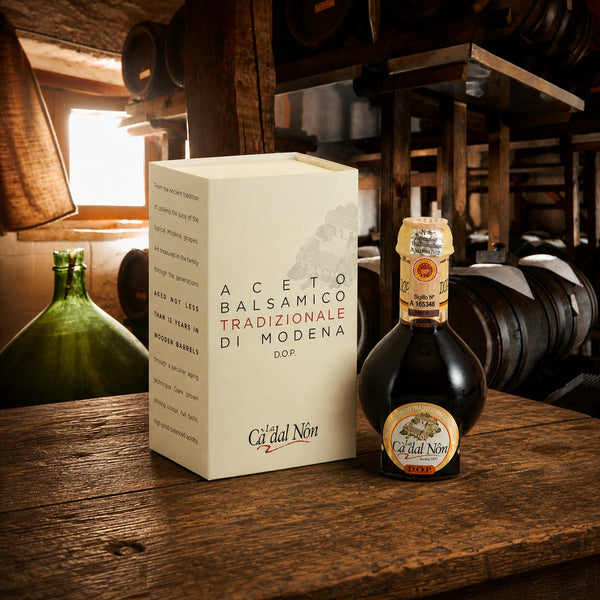
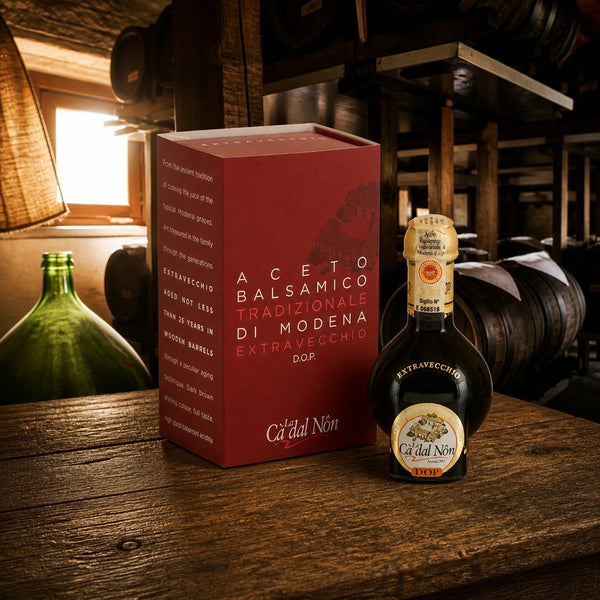
The whole method turns on the quality of the vinegar. A traditional barrel-aged balsamic is syrupy at room temperature and needs no cooking, sugar or cornflour to cling to the fish. Because it goes on at the end, off the heat, its aroma stays intact: the fig-and-molasses depth that a boiled-down supermarket balsamic simply loses. Use the twelve-year for the generous glaze over the fish, and if you have it, finish the plate with a few drops of an even older bottle for a last note of concentration. Reducing a traditional balsamic in a pan would be a small tragedy; this recipe is built so you never have to.
Ingredients
- 4 salmon fillets (about 150g each), skin on
- 2 to 3 tablespoons traditional aged balsamic vinegar, plus a few drops of extra-aged to finish
- 1 tablespoon extra virgin olive oil
- 1 clove garlic, finely grated, optional
- Salt and freshly ground black pepper
- A few sprigs of thyme or rosemary, optional
Equipment
- An oven tray or an ovenproof frying pan
- A fish slice
Method
- Heat the oven. Set it to 200C (fan 180C). Line a tray or ready an ovenproof pan.
- Season the salmon. Pat the fillets dry, rub with olive oil and the grated garlic if using, and season well with salt and pepper. Set them skin-side down on the tray.
- Roast. Cook for 10 to 12 minutes, until the salmon is just opaque and flakes at a gentle press but is still moist in the middle. Tuck in the herb sprigs for the last few minutes if you like.
- Glaze off the heat. Lift the salmon onto plates and, while it rests, spoon the aged balsamic generously over each fillet so it pools and clings. Finish with a few drops of the oldest balsamic you have and a little more black pepper.
Chef's notes and common mistakes
- Do not reduce a traditional balsamic. It is already a glaze. Boiling it wastes both the bottle and its flavour.
- Do not overcook the salmon. Pull it while the centre is still slightly translucent; it carries on cooking as it rests. Dry salmon is the most common fault here.
- Glaze at the end. Adding the balsamic before or during cooking dulls its aroma and can catch and burn. It goes on last, off the heat.
- Dry the fish first. A dry surface seasons and colours far better than a wet one.
Variations
The same treatment suits any rich fish: try it with trout, or with meaty tuna cooked rare. A teaspoon of honey rubbed on before roasting gives a stickier, sweeter finish for those who like it. For an Asian-leaning version, whisk a little soy and grated ginger into the olive oil before it goes on the fish, keeping the balsamic as the finishing note. The glaze is also excellent over roast chicken thighs or seared duck if salmon is not to hand.
Make ahead and storage
Salmon is best cooked to order, but leftovers are useful: keep cooked fillets covered in the fridge for up to two days and flake them cold through a salad or warm gently to avoid drying them out. Add fresh balsamic to leftovers rather than relying on yesterday's glaze. The dish does not freeze well once cooked.
Serving and pairing
Serve the salmon with something to catch the glaze: crushed new potatoes, soft polenta, or plain rice, with a sharp green salad or wilted greens alongside. A light red such as Pinot Noir stands up to both the fish and the balsamic, while a fuller white like an oaked Chardonnay works if you prefer white. The sweet-savoury glaze also makes this an easy dish to serve to guests, since almost all of it happens in the last five minutes.