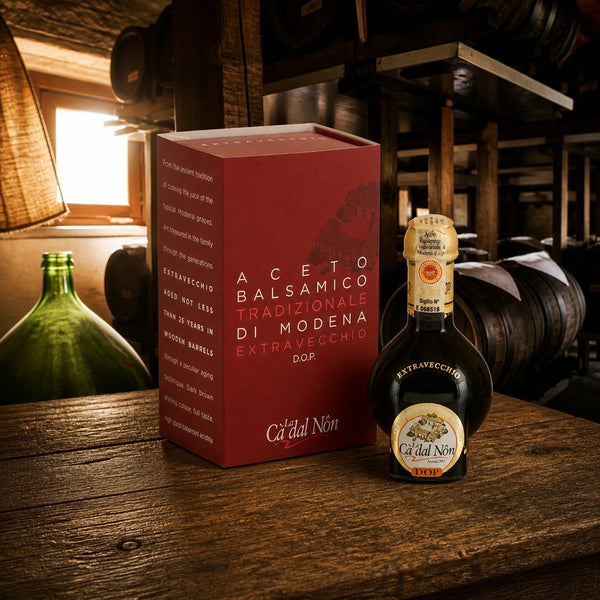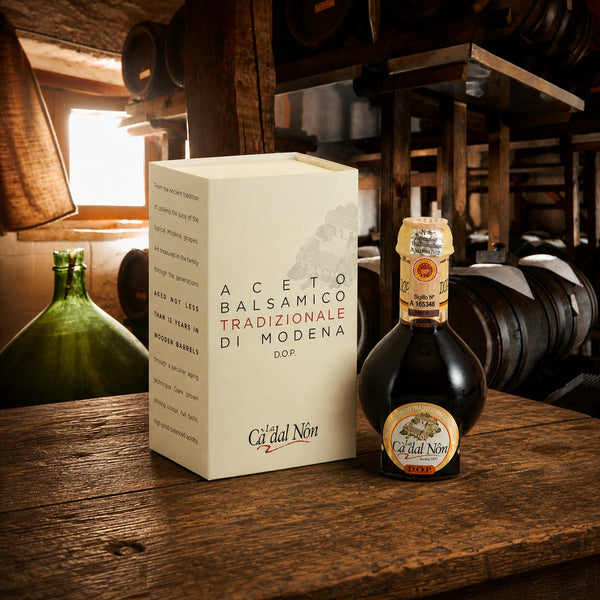

In Modena, the home of balsamic vinegar, the most celebrated way to end a summer meal is also the simplest: ripe strawberries, a little sugar, and a spoonful of traditional aged balsamic. Fragole all'aceto balsamico sounds improbable to anyone who has only met balsamic as a salad dressing, and then converts them at the first taste. The vinegar does not make the strawberries taste of vinegar; it makes them taste more intensely of strawberry, the way a pinch of salt makes caramel taste more of caramel.
This is a dessert that lives or dies by two things and two things only: the ripeness of the fruit and the quality of the balsamic. There is no cooking to get right and no technique to master. It is, in the truest sense, a way of serving a great ingredient rather than a recipe.
Why the balsamic matters
Here the balsamic is not a seasoning but the whole idea. A traditional barrel-aged balsamic is dense, glossy and sweet, closer to a fruit syrup than to vinegar, with notes of fig, cherry and molasses that sit perfectly against strawberry. This is the one dessert where it is worth reaching for your best bottle: an extra-aged balsamic, spooned straight over the fruit, needs nothing else. A young or industrial balsamic, thin and sharp, will taste harsh here and miss the point entirely.
Ingredients
- 500g ripe strawberries, hulled and halved or quartered
- 1 to 2 tablespoons caster sugar, to taste
- 2 to 3 tablespoons traditional aged balsamic vinegar
- A few leaves of fresh mint or basil, optional
- Freshly ground black pepper, optional but traditional
Equipment
- A mixing bowl
- A spoon
Method
- Macerate. Put the prepared strawberries in a bowl, sprinkle over the sugar, and toss gently. Leave for 15 to 20 minutes at room temperature; the sugar draws out the juices and forms a light syrup.
- Add the balsamic. Spoon over the aged balsamic and turn the strawberries through it. Taste, and add a little more sugar or balsamic until the balance is sweet with a gentle tang.
- Rest and finish. Leave another five minutes for the flavours to marry. Finish, if you like, with torn mint and a small grind of black pepper, which sharpens the fruit further.
Chef's notes and common mistakes
- Use your best balsamic. This dish is a showcase. The better and older the vinegar, the more remarkable the result, and there is nowhere for a poor one to hide.
- Do not skip the maceration. The fifteen minutes with sugar is what turns cut strawberries into a dessert with its own syrup.
- Add the pepper. A little black pepper sounds strange and tastes wonderful, lifting the strawberries the way it does in the classic pepper-and-strawberry pairing.
- Room temperature fruit. As with all strawberries, cold mutes the flavour. Do not serve these straight from the fridge.
Variations
The classic serving is over a scoop of good vanilla gelato, the cold cream against the warm-sweet fruit and dark balsamic. It is equally at home spooned over mascarpone, panna cotta, or a slice of plain sponge. For a more grown-up version, add a splash of red wine or a little grated orange zest to the maceration. A handful of the strawberries and their syrup also make an extraordinary topping for morning yoghurt.
Make ahead and storage
Macerated strawberries are best eaten within a couple of hours, while they still hold their shape. They will keep, covered, in the fridge for up to a day, softening as they sit into something closer to a compote, which is no bad thing over ice cream. Add the balsamic fresh rather than storing the fruit in it for days, so its aroma stays lively.
Serving and pairing
Serve in small glasses or bowls, alone or over gelato, at the end of a summer dinner. A glass of chilled Lambrusco, the sparkling red of Emilia-Romagna, is the regional match and cuts the sweetness beautifully. A late-harvest dessert wine or a simple glass of prosecco works too. Keep the portions small: this is a dessert that impresses by its intensity, not its size.